Anderson Tree & Stump Co. handles stump grinding in Anderson and across the county. It doesn’t matter how the stump got there. Some are left from our own removals. Many are left from storm cleanup, when the tree was cut up and hauled but the stump was never touched.
Stump grinding turns the stump into chips, down to below the surface. The lawn around it is left as it was, and the area can be filled and seeded.
If you asked for stump removal and meant getting rid of the stump you can see, grinding is the service you want. Removing the entire stump and roots by digging is different work, and we can talk about it if you need it.
Tell us what the spot will be used for. Lawn, a garden bed, a new tree and a concrete pad each need something slightly different from the grinding.
Call 864-581-2975 or send the form. Count the stumps and estimate how wide each one is, and we can go from there.
Free quote. No obligation.
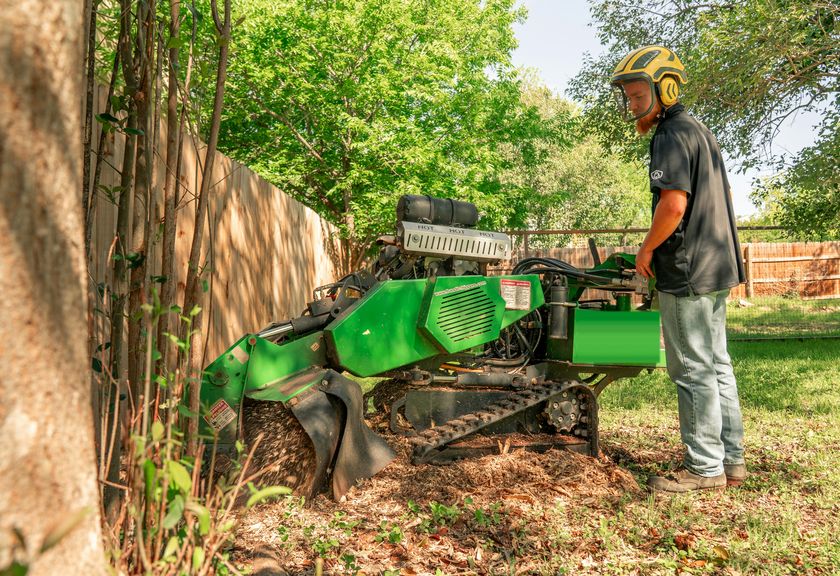
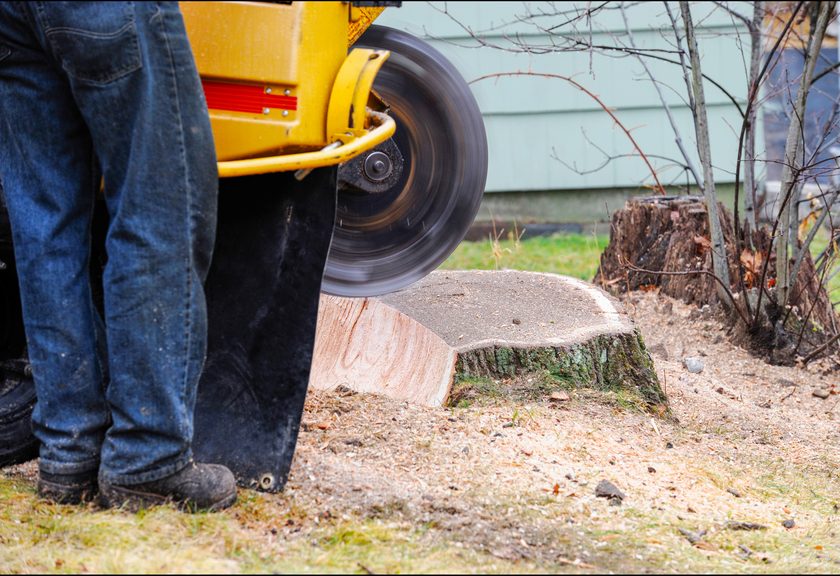
A stump grinder has a cutting wheel fitted with carbide teeth. The wheel is passed over the stump again and again, each pass taking off a layer, until the wood is below ground.
Underground utilities are marked before grinding. Lines you installed yourself are not part of that marking. Show us irrigation, lighting cable, pet fencing and anything else buried near the stump. Rocks and edging around it should be cleared away.
The grinder works across the stump and can follow large surface roots outward. Say which roots you want gone. Let us know in advance about tight gates and stumps close to walls.
A pile of chips and soil is left in the hole. Keep it for mulch or have it taken. Where grass is planned, remove most of the chips and fill with soil, since fresh chips take nitrogen from the ground as they rot.
Expect a low mound of chips and soil, wider than the stump was, because the grinder also takes the flared roots around it. The mound settles as the chips break down, so a spot filled level today will dip later and may need topping up with soil before the grass evens out.


Stump grinding is the usual choice for a home lawn. It does little damage to the yard, and the spot can be mowed once it is filled.
Stump removal by digging takes out the stump and the large roots with heavy equipment. The hole is big and needs filling. It is done when a building, a slab or a pool will sit on that ground.
Burning a stump or treating it with chemicals is slow and unreliable. Fire can also travel through the roots underground, so it is a poor idea in dry weather.
Surface roots are a separate question. Roots that run across the lawn can be ground along with the stump. Roots that have grown under a sidewalk, a driveway or a foundation cannot be reached without lifting what sits on them, so grinding stops at the edge. Say where the roots are causing trouble and we can tell you what is possible.
Stumps from trees that blew over are a special case, and Helene left many of them. The root plate stands on edge with a hole beside it. The roots are cut free, the plate is lowered or broken up, and then the stump is ground like any other. Mention it when you call, because the job is bigger than a stump that was cut flat.
Age is not a problem, and a rotten stump grinds easily. Metal and stone are the problem. A stump with wire, nails or a concrete collar in it should be pointed out.
Location matters as much as species. A stump in the open is the simple case. One beside a fence, against a retaining wall or over the septic field needs a smaller machine or a different angle, and one close to a gas or water line may only be ground part of the way down. These are things to raise before the day, not on it.
Stump grinding cost is based mainly on diameter. Measure across the stump at ground level, including the roots that flare out. The quote is free and also reflects:
If the tree is still standing, the stump can be quoted with the tree removal.
Deep enough to cover with soil and grow grass. If you want to plant a tree or set a post in the same place, tell us, because that needs more depth.
In most trees they don’t. With the stump gone the roots slowly decay. Sweetgum, crape myrtle and Bradford pear are exceptions and may sprout from the roots for a time. Keep cutting the sprouts and they stop.
It will rot eventually, but slowly, and hardwoods take the longest. While it lasts it sprouts, draws insects and stays in the way of the mower.
Have stumps to clear? Call 864-581-2975 or send the form for a free quote.
Start from the home page to see everything in one place, or go to the contact page to reach us.